The cheapest website can become the most expensive choice if it doesn’t meet your business needs. The cost of small business web design in Brisbane depends on the project’s scope, design requirements, functionality and content. Digital Accord provides a quote based on the work involved.
It’s reasonable to want a clear idea of what you’re paying for before you commit. Compare more than the initial price: check what the website includes, how it works on mobile devices and how it can be maintained over time.
This guide explains what a small business website should include, what to expect during design and development, and how responsive design works in practice. It also covers the factors that shape project costs and what to look for in a Brisbane web designer, helping you choose an approach that fits your business goals.
Key Takeaways
- Define the pages, content and functions your website needs so the project scope reflects your business goals.
- Understand the key stages of professional web design and development, from planning through to launch.
- Learn how responsive design helps your site adapt to different screen sizes and makes it easier to use on mobile.
- Choose a Brisbane web designer by looking beyond the initial quote to the project process, ongoing maintenance and fit for your needs.
What Should a Small Business Website Include?
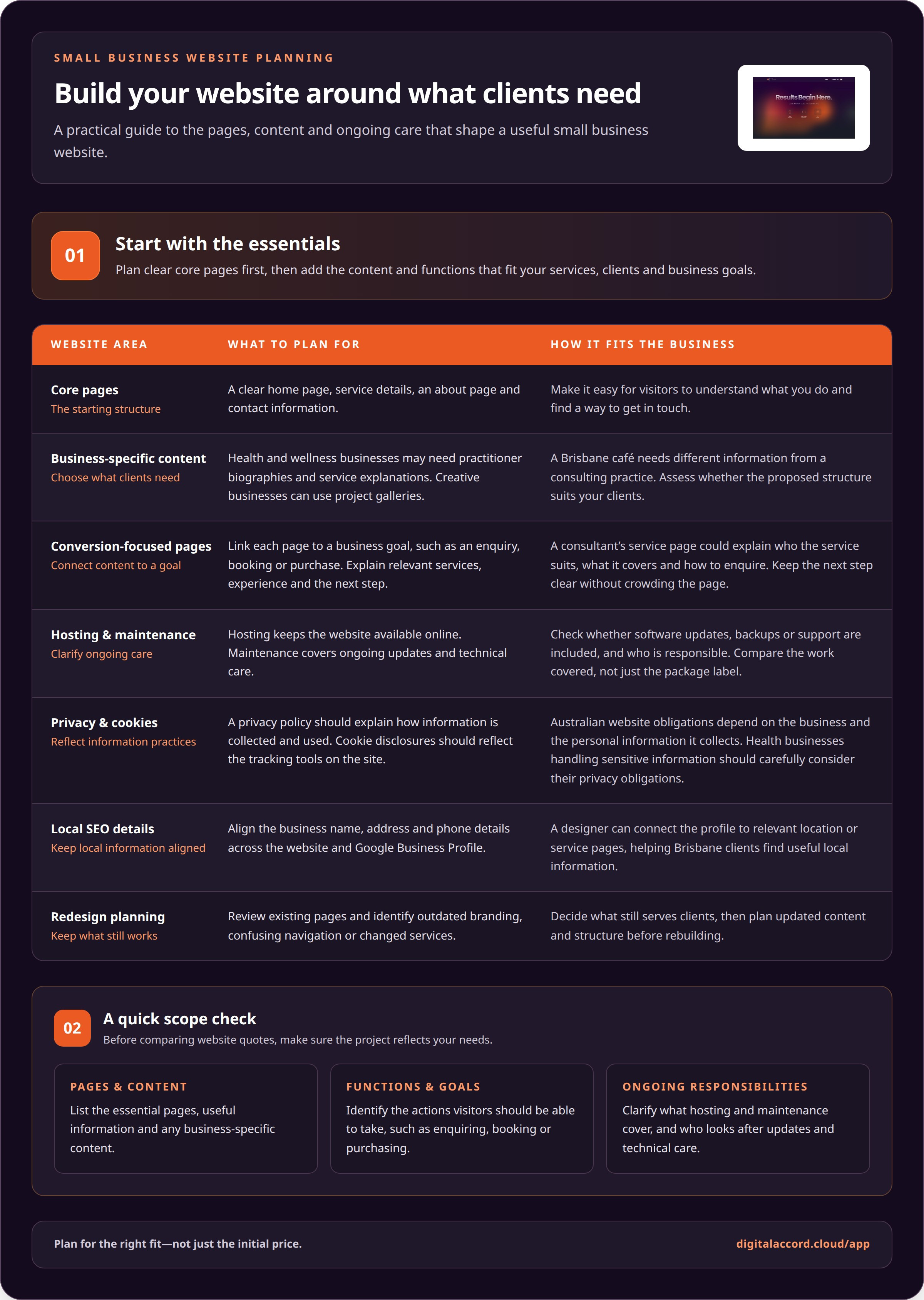
Plan the site around essential pages, useful content and clear ways to get in touch. A Brisbane café, for example, needs different information from a consulting practice.
Website design and development
Website design should help clients understand your services and take the next step. A clear home page, service details, an about page and contact information are a practical starting point. Health and wellness businesses may need practitioner biographies and service explanations, while creative businesses can use project galleries to show their work. Assess whether the proposed structure suits your clients and business.
Conversion-focused website strategy
Effective design connects each page to a business goal, such as an enquiry, booking or purchase. Content should help visitors find relevant services, understand your experience and see a clear next step. For example, a consultant’s service page could explain who the service suits, what it covers and how to enquire. Look for a strategy that makes action easy without crowding the page.
Hosting keeps a website available online, while maintenance covers ongoing updates and technical care. Clarify what each arrangement includes, such as software updates, backups or support, and who is responsible for it. Packages vary, so compare the work covered rather than relying on the label alone.
Australian website obligations depend on the business and the personal information it collects. A privacy policy should explain how information is collected and used, and cookie disclosures should reflect the tracking tools on the site. Health businesses that handle sensitive information should carefully consider their privacy obligations.
For local SEO, align the business name, address and phone details across the website and Google Business Profile. A designer can connect the profile to relevant location or service pages, helping Brisbane clients find useful local information.
A redesign can address outdated branding, confusing navigation or changed services. Review existing pages, identify what still serves clients, then plan the updated content and structure before rebuilding.
Web design and development process
A clear process turns business goals into a working website. Projects typically move through discovery, planning, design, development, testing and launch, with decisions at each stage shaping the result.
During discovery, the designer learns about your services, clients and marketing priorities. A local builder, for example, may need project galleries and enquiry forms, while an ecommerce business needs product pages and a checkout journey. This step defines the audience, essential features and content before design begins.
Next, the site structure maps how visitors move between pages. The designer plans navigation and page layouts, then develops visual concepts around your branding. Once approved, the design is built into pages and functions. Content entry, mobile testing and quality checks follow before launch. Website projects typically take six to eight weeks from discovery to launch, depending on scope and feedback.
Custom web development suits business websites that need more than standard pages. Examples include booking flows, customer portals or connections between a website and an existing business system. The developer defines how each function should work, builds it into the site and tests real user journeys. Clear requirements help keep the project focused.
A custom web app may suit a business whose main purpose is an interactive tool rather than presenting services or products. A membership portal, for instance, could let registered users access tailored information. Before choosing an approach, the design and development team needs to understand the user roles, data inputs and actions the app must support.
Before launch, the team checks links, forms, page layouts and key conversion paths. For an ecommerce site, that includes testing the purchase journey; for a service business, it means ensuring enquiries reach the right place. These checks connect technical delivery with practical business outcomes.
For a project that needs a tailored website, discuss your website project as a next step.
Mobile-first responsive design
Mobile-first design starts with the smallest screen, then adapts layouts for tablets and desktop computers. KND says more than 70% of customers use their phones to find a business. For a Brisbane customer checking a service between appointments, readable text and simple navigation can make the difference between finding key details and leaving.
Responsive design adjusts page elements to fit different screen widths. A desktop menu might become a compact mobile menu, while columns stack vertically. Designers also make buttons easy to tap and keep contact details visible. On a mobile service page, a clear phone or enquiry option should appear before visitors have to search through long blocks of text.
Prioritising mobile helps focus the site on essential content. The service summary, location and next step can appear prominently, with supporting details given more space on larger screens. For an ecommerce business, product images, descriptions and checkout controls need to remain usable on a phone. Content should work across devices without awkward horizontal scrolling.
Testing helps prepare a responsive site for launch. The development team checks layouts on different screen sizes, tests navigation and forms, and looks for overlapping text or images. For example, a booking form should be easy to complete with a phone keyboard, with its fields visible as a customer enters details.
Responsive design needs ongoing attention as a business changes its pages, images or digital features. New content can disrupt an existing layout, so review updates on mobile as well as desktop. A good mobile experience depends on clear priorities, practical testing and consistent design, not simply shrinking a desktop page.
Choosing a web designer in Brisbane
Brisbane agencies and freelance designers can both build effective business websites. An agency may coordinate design, development and marketing across a team, while a freelancer often works directly with you on the project. The right fit depends on your scope, communication preferences and the expertise required.
Compare relevant work, not just polished screenshots. A restaurant website should make its menu and booking path easy to find; a tradie’s site needs clear service areas and enquiry options. Ask how the designer approaches accessibility, mobile layouts, search optimisation and post-launch support. These details show how the work addresses real customer needs.
Google’s Search Essentials emphasises helpful content, relevant search terms and crawlable links. Look for a designer who considers these foundations alongside appearance. A Brisbane service page, for example, should explain the service clearly and connect visitors to useful related pages.
Risks include unclear ownership of the domain, website files or content, and a project scope that leaves out key tasks. Extra charges may apply for copywriting, revisions, hosting, ongoing maintenance, software integrations or moving an existing website. Get the deliverables, exclusions and ongoing responsibilities documented before work begins.
Use a simple selection process: define essential features, review relevant examples, then discuss how the designer will deliver and support them. A portfolio should show more than visual style. Check whether projects include features such as appointment bookings, product catalogues or enquiry forms that match your requirements.
For small business web design in Brisbane, consider how the proposed site will support future changes. An existing website may need content migration, redirects or a refreshed structure, while a new business may need branding and domain setup. Discuss these needs early so they are reflected in the project scope.
Choose a designer whose process makes responsibilities, deliverables and ongoing care clear. Discuss your website project to explore a practical next step.
Digital Accord
Digital Accord can help turn your website requirements into a considered digital plan. If you’re weighing up a new site or redesign, the team can align website design and development with your business goals, audience and future needs.
Where a website also needs greater visibility, Google Advertising and social media services can support the wider marketing effort. The right mix depends on your priorities, such as generating enquiries, promoting services or reaching local customers. This joined-up approach connects the website experience with how people discover your business.
Bring your goals, essential features and any existing website concerns into the conversation. Digital Accord can discuss a practical direction for your project. Contact Digital Accord to talk through your website needs.
Set your website up for what comes next
For small business web design in Brisbane, consider how your website can support the business as it changes. Treat it as an active business asset, with room to reflect new services, customer priorities and marketing plans. This helps you assess proposals for long-term usefulness, not just launch-day appearance.
Your website decisions should fit your wider business goals. Digital Accord offers Website Design & Development, Google Advertising and Social Media Management to support your digital priorities. A clear conversation about what your business needs now can help shape a practical direction.
Before moving ahead, gather your main objectives, existing website concerns and the functions customers need. These priorities give the project discussion a useful foundation. If you’re ready to explore your next step, talk through your website goals with Digital Accord. A considered plan can help your business move forward with greater clarity.
Frequently Asked Questions
How much does a website cost?
The cost depends on the work your website needs, and Digital Accord provides a price after a quote request. Key factors include the number and complexity of pages, custom functions, content requirements, integrations and whether existing material needs transferring. A simple service site has different requirements from an online store with product management. A clear project scope shows what the quote covers.
How long does it take to build a website?
A website project typically takes six to eight weeks from discovery to launch. The schedule also depends on how quickly content, images and feedback are supplied, as well as the complexity of required features. An online store, for example, needs product information and checkout testing. Agreeing who will provide each asset helps keep reviews and approvals moving.
How soon can you start on my web design project?
The start date is set after the project scope and schedule are agreed. The team first needs to understand your goals, required features and any existing website material to carry across. Having brand assets, key content and decision-makers ready helps the planning stage begin with fewer delays and gives the work a defined starting point.
Cheap website or affordable website?
A cheap website prioritises a low upfront price, while an affordable website balances investment with the work needed to serve your business. A low quote may leave out tasks such as content entry or integrations, which then need separate planning. Compare what each proposal delivers, including site ownership and the work required to keep the website useful as your business changes.
What does affordable web design actually mean?
Affordable web design means paying for a scope that fits your current needs without creating avoidable work later. A service business, for example, may need clear service pages and enquiry handling before adding advanced features. A practical proposal explains the deliverables, responsibilities and ongoing care, so you understand what the project supports and what may require further work.
What are the hosting fees for a website, and are there other ongoing costs?
Hosting fees and ongoing costs depend on the hosting arrangement and website requirements. Digital Accord provides a price after a quote request. Budget planning may also account for domain renewal, software licences, maintenance, security updates and future content changes. These are separate from the initial build, so ask for recurring services and one-off work to be clearly distinguished in the proposal.